A practical guide for better estimation
The Ultimate Guide to Agile Estimation Techniques for Teams (2026)
Download our practical guide for estimation techniques that spot hidden complexity, build team alignment, and create realistic sprint plans, without the usual debates.
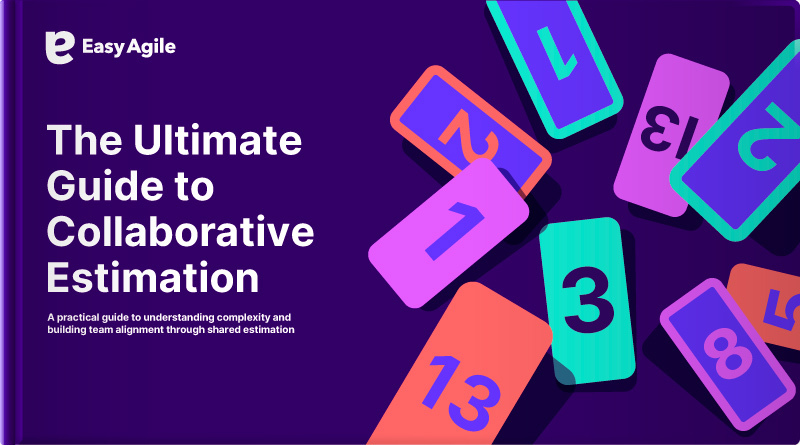
Stop treating estimates as promises waiting to be broken. Estimation works best when it helps the team spot risks early, build shared understanding, and plan in a way stakeholders can rely on.
This guide gives you practical tools and clear steps you can use straight away. You will learn proven estimation techniques, simple facilitation methods, and the metrics that help teams improve without pressure or blame.
What's inside
Proven estimation techniques you can apply at once: Planning Poker, Affinity Estimation, T-shirt Sizing, and Three-Point Estimating with concise guidance on when to use each one and how to keep sessions focused and useful.
- Proven estimation techniques you can apply at once
Planning Poker, Affinity Estimation, T-shirt Sizing, and Three-Point Estimating with concise guidance on when to use each one and how to keep sessions focused and useful.
- The ALIGN framework for collaborative estimation
A five-step routine that helps teams estimate together in two to three minutes per story. It creates space for real discussion, highlights gaps in understanding, and turns disagreement into insight instead of tension.
- Why story points fail and how to fix the issues behind them
A clear look at why estimation earns a poor reputation, from stretched promises to misused velocity, and practical ways to reset the practice.
- Metrics that actually help you improve
Learn what to measure so you can see whether estimation is working. Confidence tag coverage, carry-over rates, and split-after-estimate rates show patterns without creating fear or pressure.
- Connecting estimates to delivery
See how estimation insights help you shape stronger sprint plans. You will understand how to sequence risky work, use confidence levels to shape sprint scope, and set up more predictable delivery that builds trust.
What you learn
Learn to recognise common failure patterns in your own team and use simple habits to fix them.
Each technique comes with timings, facilitation scripts, and guidance on when it works best so you can run better refinement sessions straight away.
The ALIGN framework brings it all together:
- Agree on intent,
- Look at the work,
- Independently estimate,
- Gather differences, and
- Normalise with clarity about uncertainty.
Velocity alone cannot tell you whether estimation is healthy. The metrics in this guide help you see what your team really understands, where uncertainty lies, and how your planning habits are shifting over time.
These insights matter most when used in retrospectives. They help teams focus on patterns rather than blame.
Estimation that supports your real workflow
The final section shows how to use estimation to shape better sprint planning. You will see how confidence levels influence sprint selection, why tackling uncertain items early protects momentum, and how a simple shift in sequencing reduces the chance of late surprises.
Run better estimation sessions in Jira
Easy Agile TeamRhythm brings the ALIGN framework straight into your Jira workflow. Run Planning Poker with silent estimation and a simultaneous reveal to avoid anchoring. Tag estimates with confidence and see them on your sprint board. Track cycle time and carry-over rate without manual work. High-confidence and high-risk stories are visible where you plan, so decisions are clearer and faster.
Download the free guide and step-by-step instructions
Schließen Sie sich den 10.000 Produktteams an, die Easy Agile bereits verwenden


Agile Estimation FAQs
Frequently asked questions
Everything you need to know about agile estimation techniques for teams